Jul 13th 2026
Al Fresco Garden Walls
A More Beautiful Way to Create Outdoor Privacy
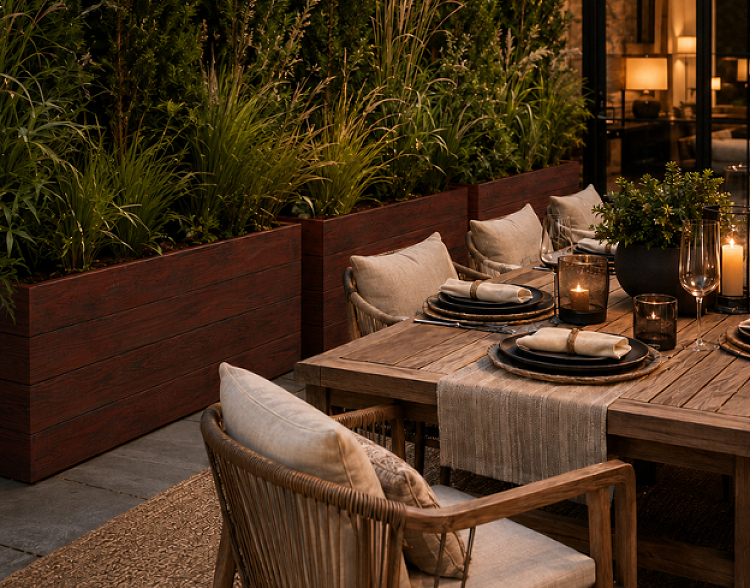
The best outdoor spaces feel like their own little world. A dining terrace tucked behind soft greenery. A poolside lounge framed by tall grasses. A quiet patio corner that feels sheltered, intentional, and just private enough.
That is the idea behind the al fresco garden wall: using large-scale planters, layered greenery, and trellis elements to create privacy without closing off the beauty of the outdoors.
Unlike a fence or solid wall, a planted screen feels alive. It moves with the breeze, softens hard surfaces, and brings a garden to patios, porches, courtyards, decks, and pool areas. For luxury homeowners, it is one of the most elegant ways to make outdoor living feel more intimate, finished, and inviting.
What Is an Al Fresco Garden Wall?
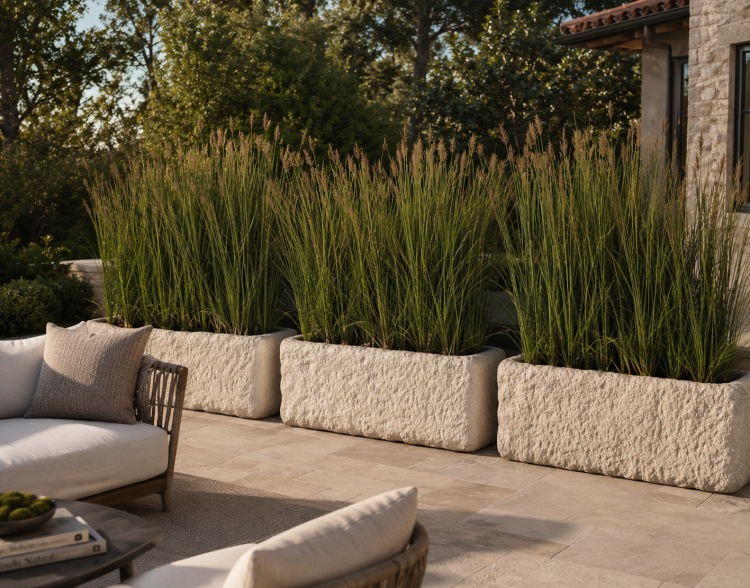
An al fresco garden wall is not necessarily a wall in the traditional sense. It is a thoughtfully arranged line of planters and greenery that helps define an outdoor area.
It might be a row of long trough planters filled with ornamental grasses beside a dining table. It might be tall rectangular planters with upright shrubs along the edge of a patio. It could also be a trellis planter that allows climbing vines or flowering greenery to grow upward, creating a more romantic and architectural screen.
The goal is simple: to create separation, softness, and atmosphere while keeping the space open-air.
Start with the Space You Want to Define
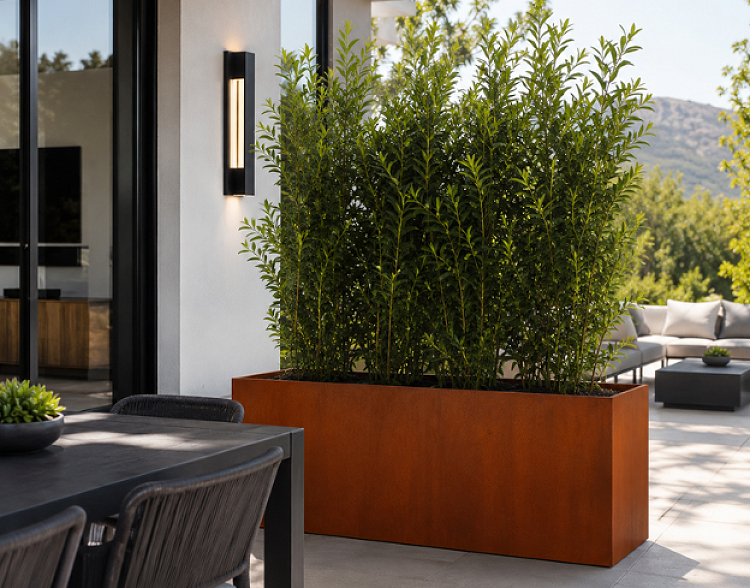
Before choosing plants or planters, think about how you want the outdoor space to feel.
For a dining patio, a garden wall can run along one side of the table to create a tucked-away feeling. Around a seating area, planters can frame the conversation zone and make the layout feel more intentional. Near a pool, a row of tall planters can create privacy from neighboring properties while adding a polished backdrop.
Placement matters. The most natural locations are usually along the edge of a patio, beside railings, near property lines, behind outdoor furniture, or along the side of an outdoor dining area. The garden wall should feel like part of the architecture, not something placed awkwardly in the middle of the space.
Choose Planters with Presence
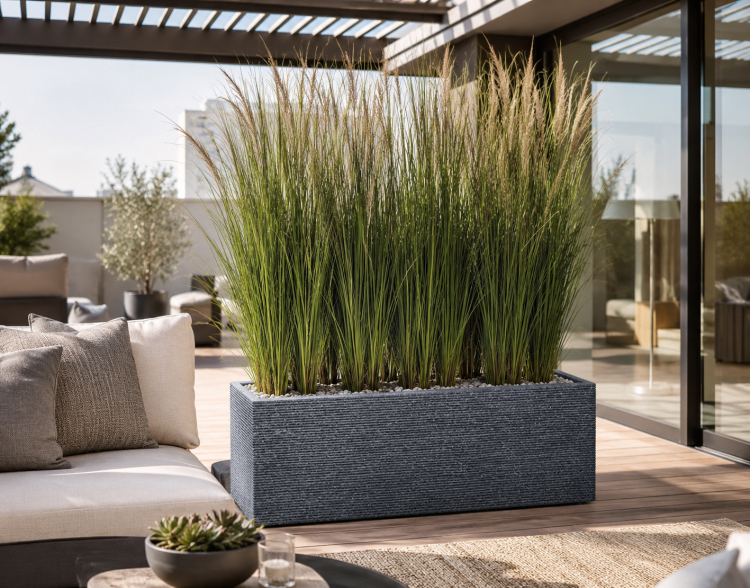
Scale is what makes a garden wall feel refined rather than scattered.
Small pots can be charming, but they rarely create enough structure for privacy or definition. Large trough planters, tall rectangles, and oversized square planters create a more architectural effect. They give the greenery a substantial base and make the overall design feel deliberate.
Fiberglass and fiberstone planters are especially well suited for this type of outdoor design. They offer the look of weight and permanence without the heaviness of concrete or stone, making them easier to place along patios, terraces, and poolside areas. Clean-lined PVC planters can also work beautifully, especially for traditional, coastal, or porch settings where crisp architectural detail is part of the charm.
For a modern home, charcoal, white, black, or stone-inspired finishes can feel tailored and minimal. For a warmer patio, textured neutrals or earthy tones help soften the look. Repeating the same planter style creates rhythm, which is one of the keys to making a planted screen feel elegant.
Use Greenery to Shape the View
Once the planters are in place, the planting becomes the layer that brings the wall to life.
For a soft, relaxed screen, ornamental grasses are a beautiful choice. They add movement, height, and a sense of ease. For a more tailored look, upright shrubs such as boxwood, podocarpus, privet, or clumping bamboo can create a fuller, more structured green backdrop.
The best plant choices will depend on your climate, light exposure, and maintenance preferences. A full-sun patio may call for heat-tolerant grasses and hardy shrubs, while a partially shaded courtyard might benefit from softer, leafy plantings.
For the most polished effect, keep the plant palette simple. One upright plant, one soft textural element, and one trailing accent is often enough. Too many varieties can make the design feel busy. A restrained palette feels calmer, more intentional, and more luxurious.
Add Height with Trellis Planters
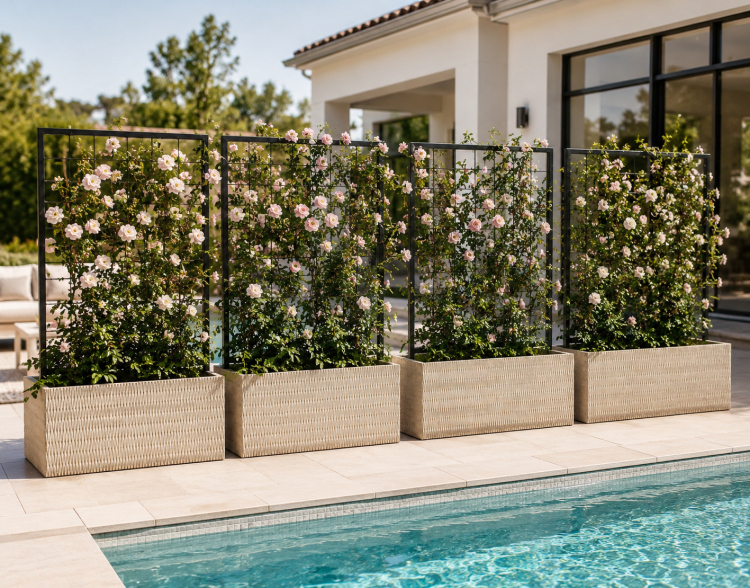
When a space needs more vertical coverage, trellis planters are a beautiful solution.
A trellis planter combines the structure of a container with the height of a screen. It can support climbing plants, flowering vines, or espalier-style greenery while taking up very little floor space. This makes it especially useful on patios, balconies, narrow side yards, and outdoor dining areas where every inch matters.
Use trellis planters behind a dining area, along the edge of a lounge space, or near a seating corner that needs more enclosure. They are also helpful when you want to screen a view without using a solid structure.
Keep the Look Refined
The most elegant garden walls are usually the simplest.
Choose one planter style and repeat it. Select a limited plant palette. Leave enough space for the greenery to grow naturally. Avoid overfilling the area with too many containers, colors, or competing shapes.
A row of charcoal trough planters with upright grasses can feel modern and serene. White PVC planters filled with boxwood and seasonal flowers can bring classic charm to a porch or patio. Fiberstone rectangles with tall shrubs can create a more contemporary privacy screen. Trellis planters with flowering vines can soften an exposed dining terrace.
The goal is not to build a barrier. It is to create a sense of retreat.
A More Beautiful Way to Feel Tucked Away
An al fresco garden wall is more than a privacy solution. It is a way to shape how an outdoor space feels.
With the right planters, plantings, and placement, a patio can become softer, more secluded, and more luxurious without losing the openness that makes outdoor living so appealing.
Explore Hooks & Lattice planters and trellis planters to create an outdoor space that feels beautifully defined, naturally layered, and made for lingering.