
Oct 5th 2026
Designing With Planters: Creating Continuity From Individual Spaces to the Larger Community
Save to Pinterest
Planters are often treated as finishing touches—something added once the architecture, hardscape, and landscape are already in place. But for builders and designers, they can play a much larger role.
Used intentionally, planters can help define space, reinforce scale, guide circulation, and create visual continuity across a project. From a single custom residence to a large master-planned community, they offer a flexible way to connect architecture and landscape without requiring permanent built-in features.
The key is to think about planters early enough for them to become part of the design rather than an accessory added at the end.
Use Planters to Reinforce the Architecture
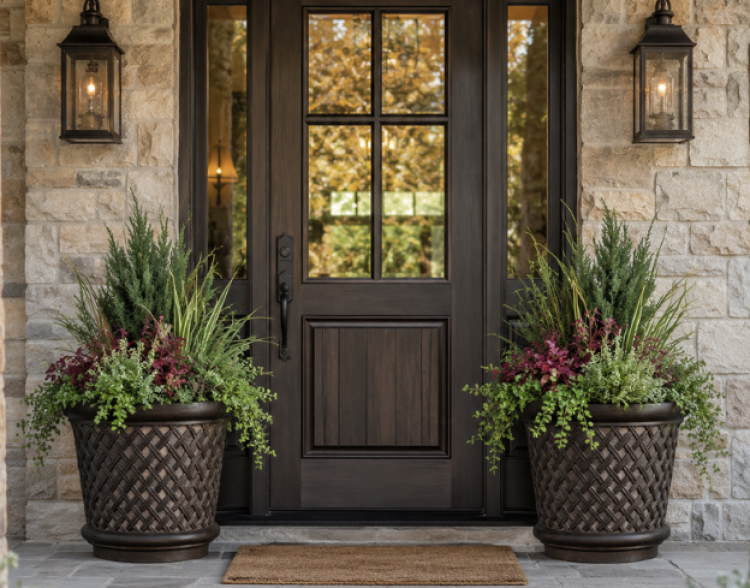
A planter should feel appropriate to the building around it.
At a residential entry, a pair of substantial planters can give a large doorway the scale it needs. Along a façade, repeated containers can establish rhythm or reinforce a strong architectural line. On a terrace or courtyard, larger forms can visually anchor furniture groupings and soften expanses of hardscape.
Scale is especially important. A planter that looks substantial in a showroom can feel surprisingly small beside an oversized entry, multi-story façade, or expansive outdoor amenity.
Consider the relationship between the planter and the surrounding architecture: door height, window proportions, columns, wall planes, furniture, and nearby landscape elements. The goal is not for the planter to command attention on its own, but to make the overall composition feel more resolved.
Define Space Without Building Walls
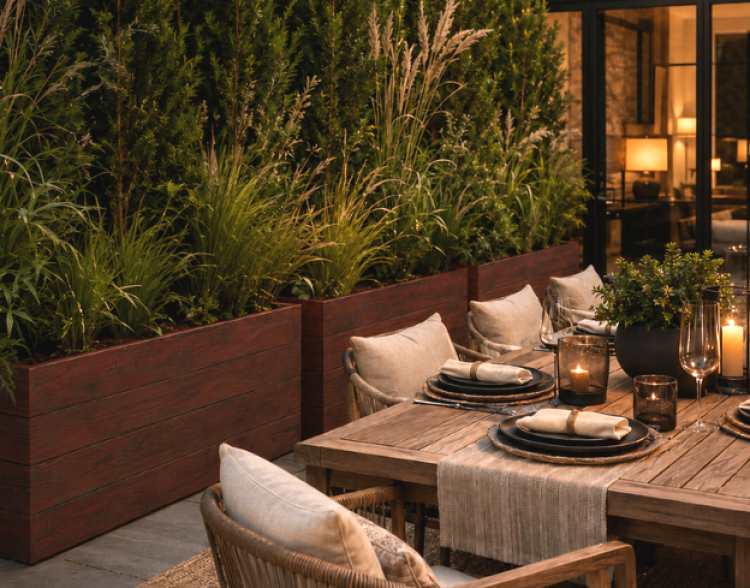
In larger outdoor environments, planters can also function as spatial tools.
Long trough planters can help separate a dining area from a pedestrian path. A grouping of tall containers can introduce privacy around a lounge without fully enclosing it. Large planters positioned near transitions can subtly signal where one use ends and another begins.
This can be particularly valuable in hospitality, multifamily, commercial, and community settings where outdoor spaces need to accommodate several activities at once.
Unlike permanent walls or built-in landscape beds, freestanding planters offer greater flexibility. They can help organize the space while preserving openness and allowing the layout to evolve over time.
Create Continuity Across a Larger Project
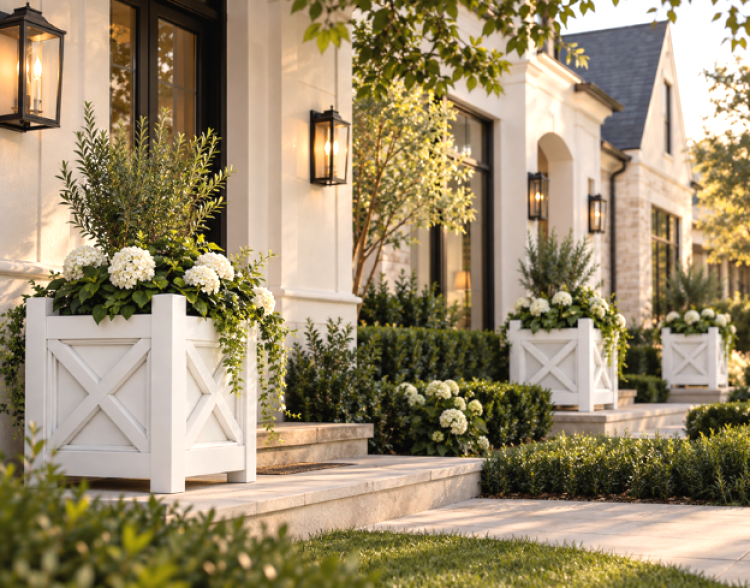
For custom home builders developing master-planned communities, planters can become part of the broader visual language of the development.
The same planter family does not need to appear everywhere. In fact, too much repetition can make a community feel overly standardized.
Instead, look for opportunities to repeat a few intentional cues.
A consistent finish might appear at individual home entries, then reappear in larger-scale planters at the clubhouse or pool. Similar forms could be used in different sizes throughout the development. A restrained material palette can connect residential streetscapes, gathering spaces, and amenity areas without making every location feel identical.
This creates continuity while still allowing each space to have its own identity.
For designers working on smaller projects, the same principle applies. Repeating a shape, finish, or proportion from the front entry to the rear terrace can make separate outdoor areas feel like parts of one complete design.
Think Beyond Planting
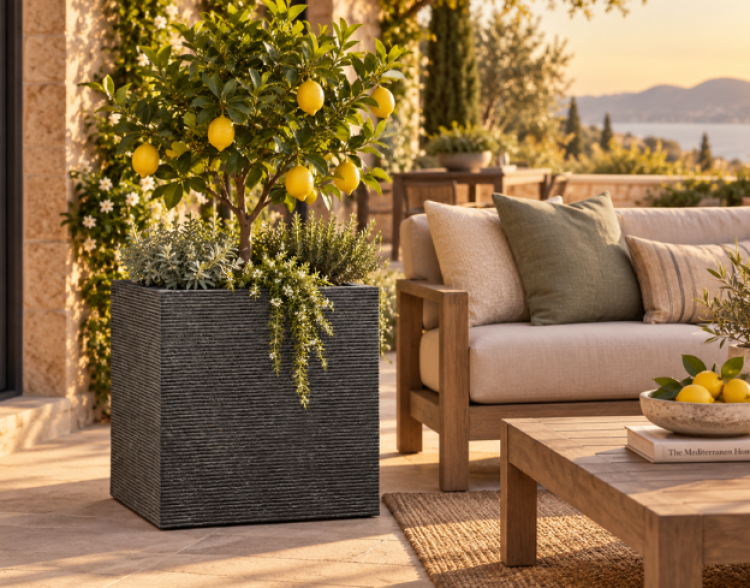
The planter itself is only one part of the equation.
Planting selections can reinforce the architecture just as effectively as the container.
Structured evergreens can complement formal or traditional elevations. Ornamental grasses can introduce movement against clean contemporary lines. Repeated planting palettes can help connect several spaces even when the planter shapes vary.
For community-scale projects, planting also introduces practical considerations. Sun exposure, irrigation, seasonal maintenance, and long-term plant size should all influence container selection.
A planter that works beautifully at installation should still feel appropriately scaled several seasons later.
Consider Durability and Maintenance Early
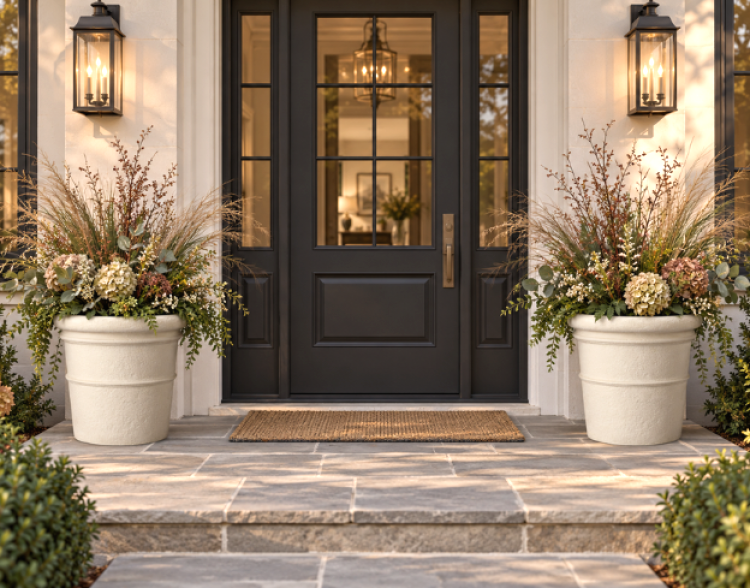
For professional projects, appearance is only part of the specification.
Planters in high-traffic or shared environments need to perform over time. Material, weight, drainage, weather exposure, irrigation, and access for maintenance all matter.
A rooftop or other weight-sensitive installation may be better suited to fiberglass planters, which offer a substantial look at a lighter weight. In high-traffic amenity spaces or other demanding applications, Fiberstone or GFRC planters provide a heavier, more substantial option. All three materials are well suited to outdoor use, including freeze-thaw conditions and prolonged sun exposure, so material selection can be driven more by weight, scale, durability needs, and the specific demands of the project.
Thinking through these considerations during the design phase can help avoid compromises later.
Know When Customization Adds Value
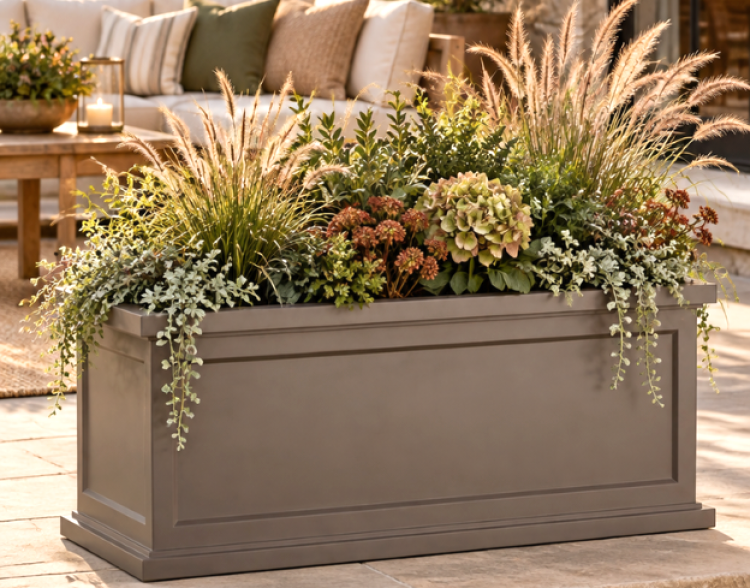
Standard planter dimensions work well for many applications, but certain projects benefit from a more tailored solution.
An unusually long wall, a narrow circulation zone, a specific architectural module, or a large-scale community installation may require dimensions that standard containers cannot provide.
Custom sizing can also help designers maintain proportion across a project. Rather than selecting the closest available size and adjusting the layout around it, the planter can be designed to support the intended composition.
For builders managing larger developments, this can be particularly useful when the same design language needs to work across several types of spaces.
Planters as Part of the Bigger Picture
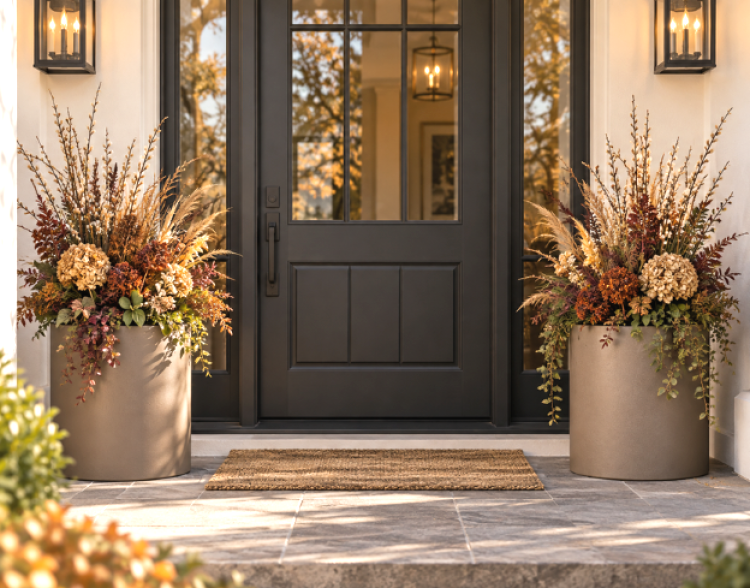
The most successful planter applications rarely call attention to the container alone.
Instead, they make the architecture feel stronger, the landscape more integrated, and the outdoor space easier to understand and use.
Whether the project is a single custom home, a hospitality setting, or an entire master-planned community, thoughtful decisions about scale, placement, repetition, material, and planting can turn planters into a meaningful part of the design strategy.
Rather than asking where a planter can be added at the end of a project, consider a more useful question earlier in the process:
Where could a planter help the entire space work better?
Explore Hooks & Lattice planter options and custom capabilities for residential, commercial, and community-scale projects.