Oct 13th 2026
How to Style a Refined Fall Centerpiece
Save to Pinterest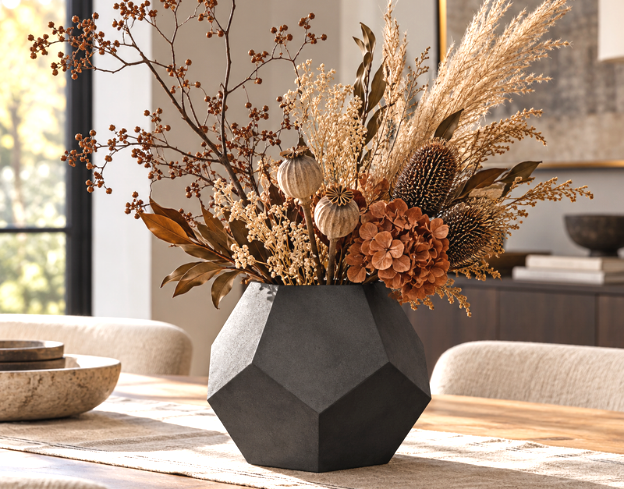
Fall centerpieces do not have to mean orange pumpkins, faux leaves, and oversized floral arrangements. Some of the most interesting seasonal tables right now feel quieter and more collected—built around natural texture, sculptural forms, unexpected materials, and a restrained color palette.
A low bowl or tabletop vessel makes an especially good foundation. Because the arrangement stays closer to the surface, it can add interest without overwhelming a coffee table or blocking conversation across a dining table.
Here are a few practical ways to create a fall centerpiece that feels refined, elevated, and effortlessly inviting.
1. Build a Tonal Arrangement
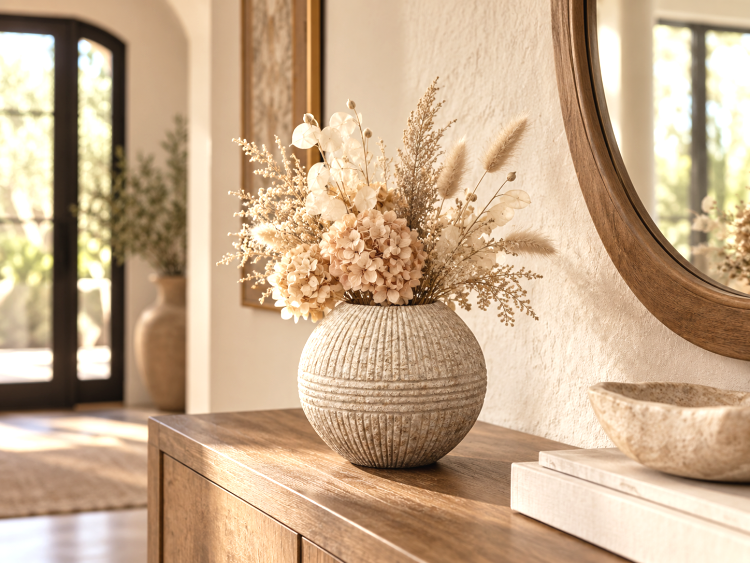
Instead of mixing every traditional fall color, choose one narrow palette and explore different shades within it.
For a warm neutral arrangement, fill a low bowl with a mix of dried hydrangea, preserved grasses, pale seed pods, cream-colored foliage, and a few branches in soft brown or taupe. For something moodier, work with burgundy, plum, chocolate, and deep olive.
The variation in texture keeps a monochromatic arrangement from feeling flat.
Best for: coffee tables, consoles, and round dining tables.
Keep it practical: Choose just three or four materials and repeat them rather than trying to fit everything into one arrangement.
2. Use Fruit as a Sculptural Element
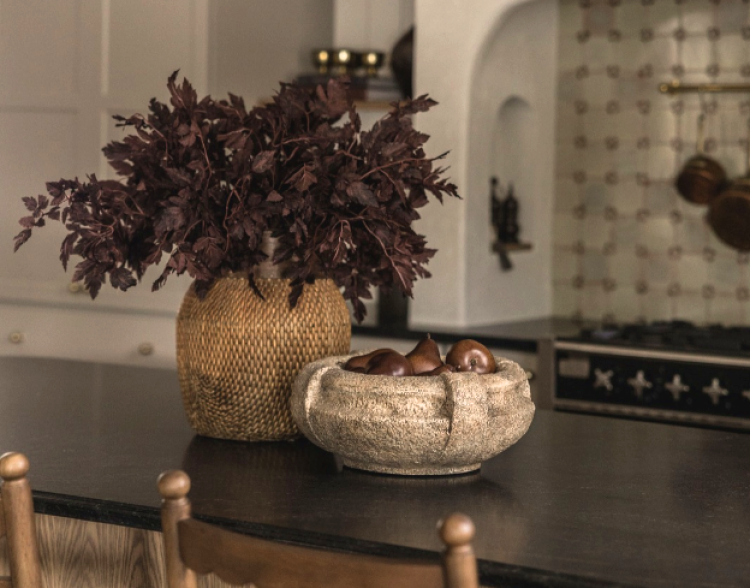
Fruit is having a moment in interiors because it brings color and organic shape to a table without feeling like conventional seasonal décor.
Try loosely filling a shallow bowl with deep red pears, figs, pomegranates, or small clusters of dark grapes. Mix in a few sprigs of olive, rosemary, or trailing greenery for softness.
The arrangement should feel abundant but not perfectly styled. Let some fruit sit at an angle or rest naturally against the edge of the vessel.
For a lighter palette, green pears with pale foliage can create a beautiful transition from late summer into fall.
Best for: dining tables, kitchen tables, and coffee tables where a lower arrangement works especially well.
3. Make Moss Feel Modern
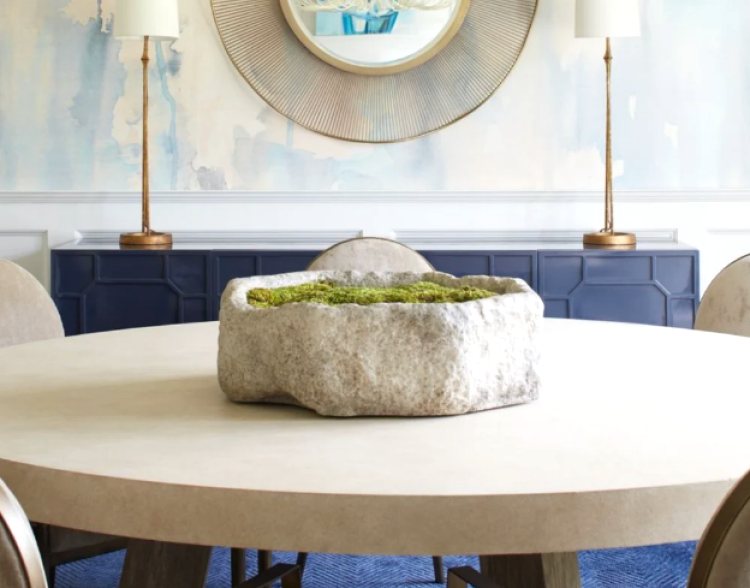
Moss can feel surprisingly sophisticated when it is used simply.
Instead of creating a miniature garden, line a sculptural tabletop bowl with preserved moss and add one or two focal elements—perhaps a cluster of artichokes, a few seed pods, or an interesting branch.
The contrast between the soft organic texture and a substantial stone-like vessel creates a centerpiece that feels almost like a small landscape.
This works particularly well in modern or organic-modern interiors.
Best for: coffee tables and large dining tables.
4. Try an Almost-Entirely Dried Arrangement
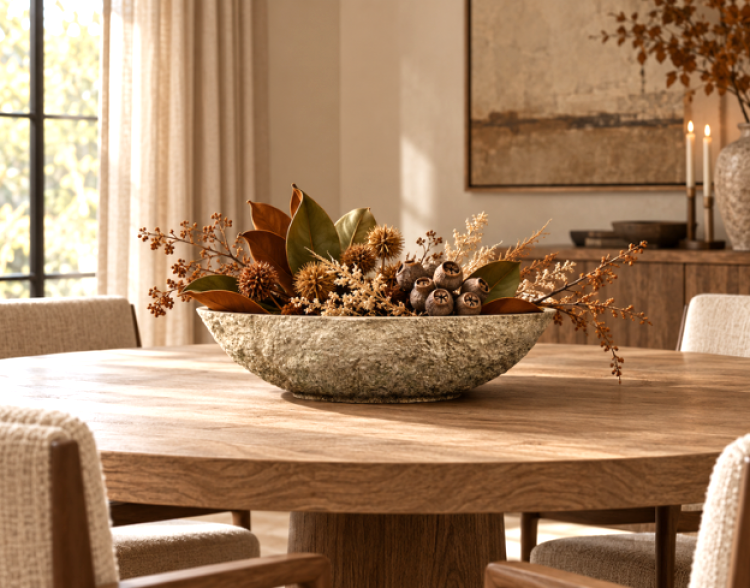
A dried arrangement is one of the easiest ways to create a centerpiece that lasts through the season.
Look beyond standard dried flowers and mix more architectural elements: preserved magnolia leaves, grasses, seed heads, branches, palm spears, dried fern, or sculptural pods.
Keep the composition relatively low and asymmetrical. Allow one or two elements to extend beyond the bowl while leaving some visible negative space.
That restraint is what keeps dried materials from looking overly rustic or busy.
Best for: large low bowls on dining tables, coffee tables, or oversized kitchen islands.
5. Create a Foraged-Looking Centerpiece
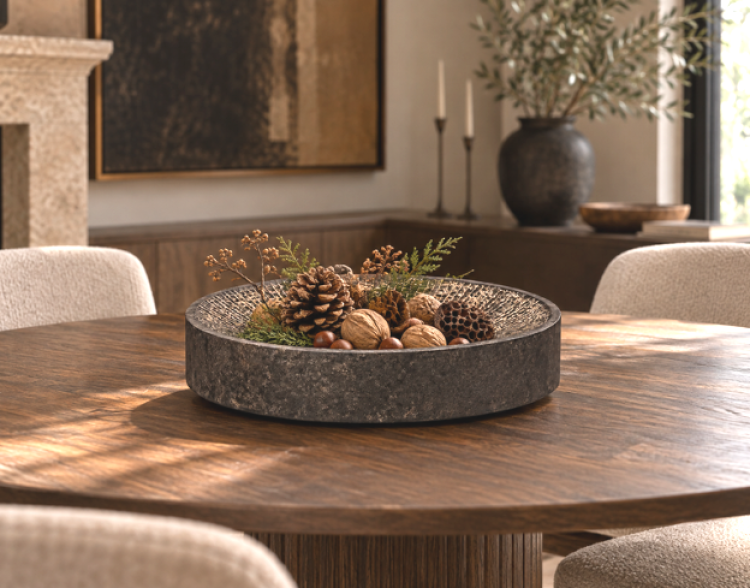
One of the best fall looks is also one of the easiest to recreate: an arrangement that appears as though it was assembled from things gathered outdoors.
Start with a low vessel and combine a few clipped branches, acorns, pinecones, nuts in their shells, dried grasses, or fallen seed pods. Add a small amount of trailing greenery to keep everything from feeling too dry.
You do not need to literally forage everything yourself. Garden centers and craft stores often carry preserved natural materials that give you the same effect.
The trick is avoiding perfect symmetry. A little irregularity makes the arrangement feel collected rather than manufactured.
Best for: casual dining tables, coffee tables, and covered outdoor spaces.
6. Use Vegetables Instead of Pumpkins
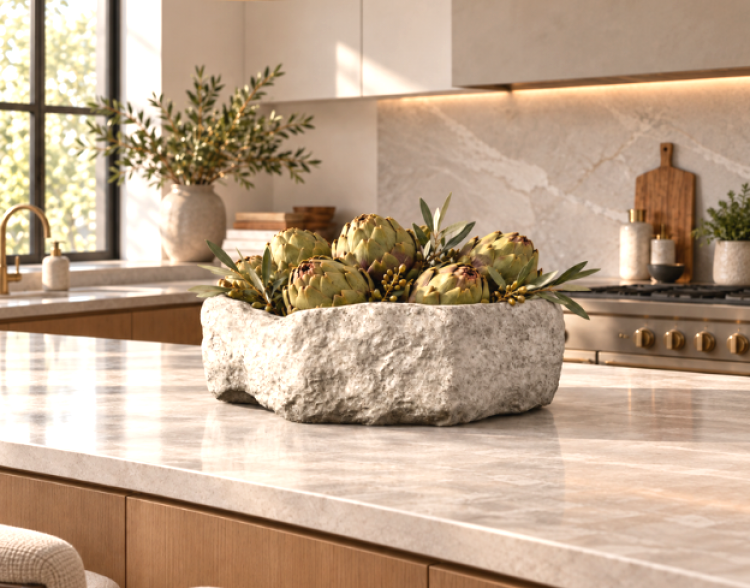
If you want a subtle nod to harvest season, try produce that feels less expected.
Artichokes are particularly good because of their sculptural shape and muted green color. Small eggplants introduce deep aubergine tones, while radicchio can add rich burgundy.
Arrange a few pieces in a substantial low bowl with greenery or herbs rather than filling the vessel completely.
It feels seasonal without immediately reading as “fall décor.”
Best for: kitchen and dining areas.
7. Let the Vessel Do More of the Work
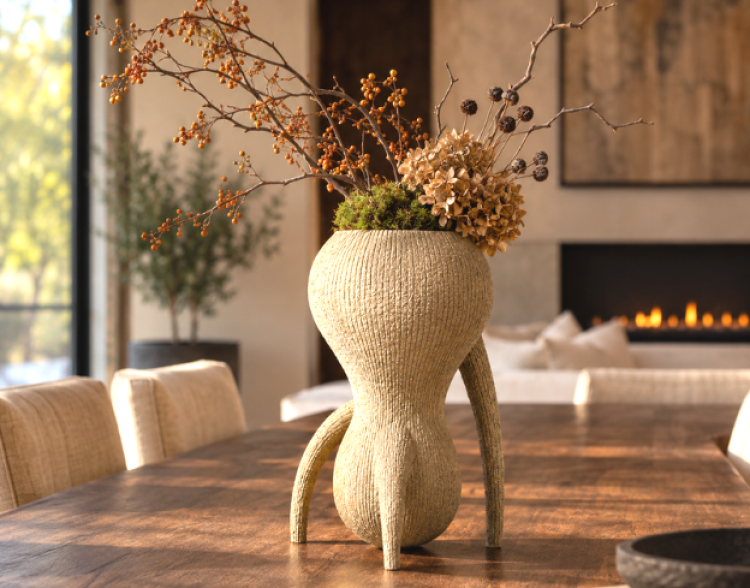
Not every centerpiece needs to be full.
If your tabletop vessel has an interesting form, finish, or texture, leave some of it visible. A low bowl filled halfway with moss and a single branch can make more of an impact than an arrangement overflowing with flowers.
This approach is particularly effective with Fiberstone, GFRC, or other stone-like vessels because the material itself brings texture and visual weight to the table.
Think of the arrangement as complementing the vessel rather than covering it.
Coffee Table vs. Dining Table: Adjust the Scale
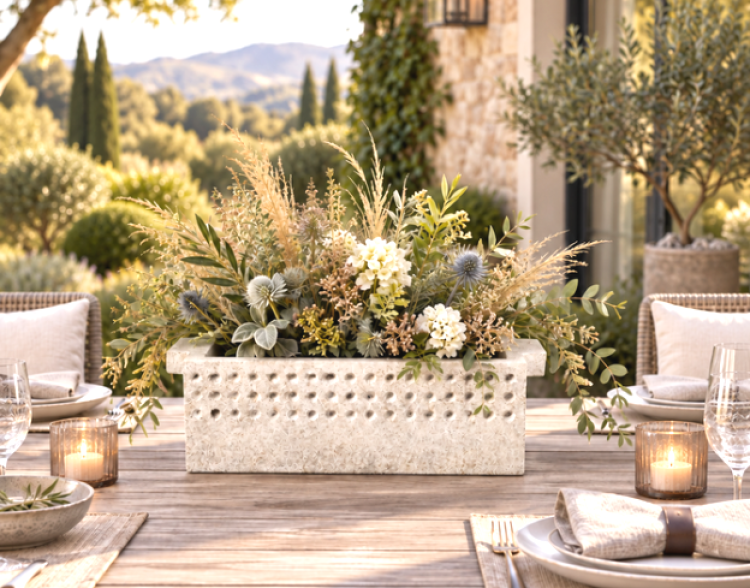
The same ideas can work in both places, but the proportions should change.
For a coffee table, keep the arrangement compact enough that it does not dominate the seating area. A low bowl with moss, fruit, or a restrained dried arrangement works well because it leaves room for books, drinks, and everyday use.
For a dining table, think horizontally. A wider, lower composition allows guests to see one another across the table. If the table is long, consider one substantial centerpiece rather than several small objects scattered down the center.
A good rule: if you have to move the centerpiece every time you sit down to eat, it is probably too tall or too large.
Keep Fall Subtle
The most refined seasonal decorating often comes from suggestion rather than literal interpretation.
Instead of relying on obvious autumn motifs, bring in fall through color, texture, and natural materials: dried leaves, rich fruit, grasses, weathered branches, preserved botanicals, and muted earth tones.
A thoughtfully styled low bowl can shift the feeling of an entire room while still looking appropriate long after October is over.
Explore Hooks & Lattice tabletop vessels and low bowls to create a fall centerpiece with texture, character, and lasting style.