Aug 16th 2026
How to Transition Window Boxes and Hanging Baskets from Summer to Fall
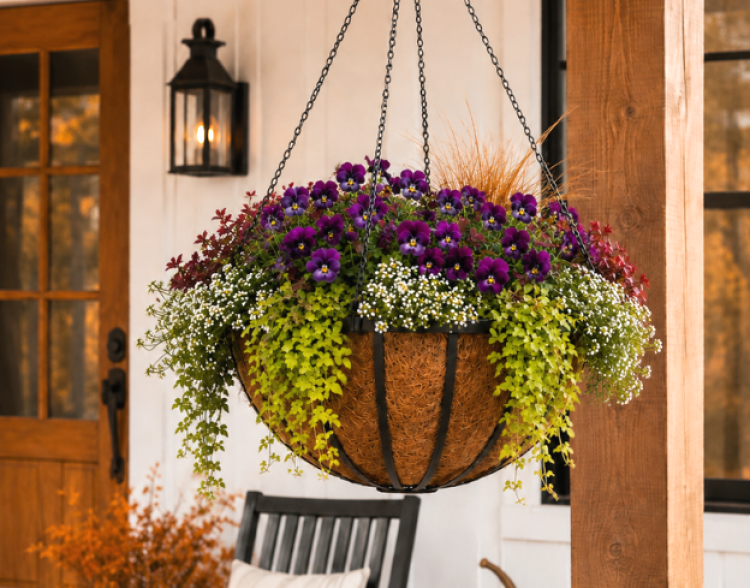
Late summer can be an awkward moment for outdoor containers. Some plants are still thriving, others are beginning to fade, and it may feel too early to replace everything with a fully autumnal arrangement. Fortunately, your window boxes and hanging baskets do not need a complete redesign to carry them into the next season.
With a few thoughtful updates, you can preserve the fullness of summer while introducing richer color, texture, and structure for early fall.
Start With What Is Still Working
Before removing your existing arrangement, take a closer look at what remains healthy. Trailing vines, ferns, ornamental grasses, ivy, and sturdy foliage plants can often continue well into cooler weather, depending on your climate.
Keeping these established plants gives the arrangement natural volume and makes the transition feel gradual rather than abrupt. Remove anything that looks tired, leggy, or damaged, then trim and reshape the remaining greenery so the container feels refreshed.
Shift the Color Palette
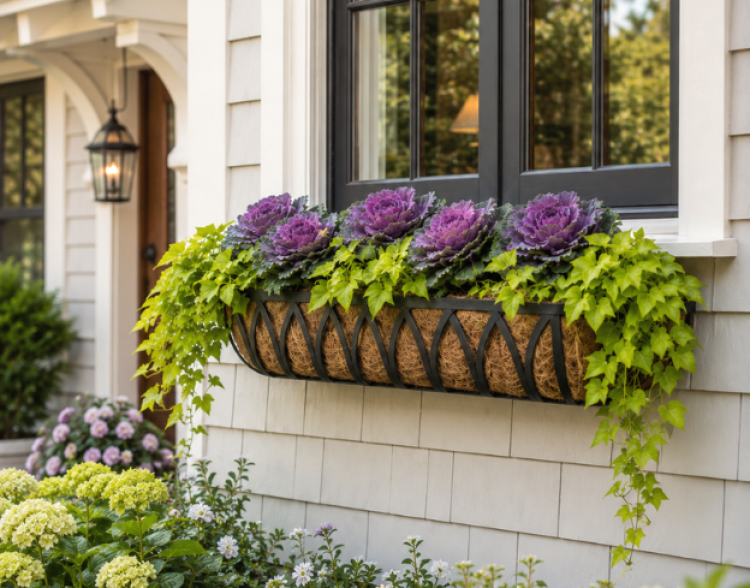
You do not have to move directly from bright summer flowers to orange mums. A more refined transition begins with deeper, muted shades that still complement late-summer greenery.
Consider adding plants in burgundy, plum, cream, copper, soft gold, or dusty rose. Ornamental peppers, heuchera, coleus, celosia, pansies, and compact grasses can introduce seasonal color without making the arrangement feel overly themed.
For a softer look, use mostly green foliage with one rich accent color repeated throughout the window box or basket.
Add Texture and Height
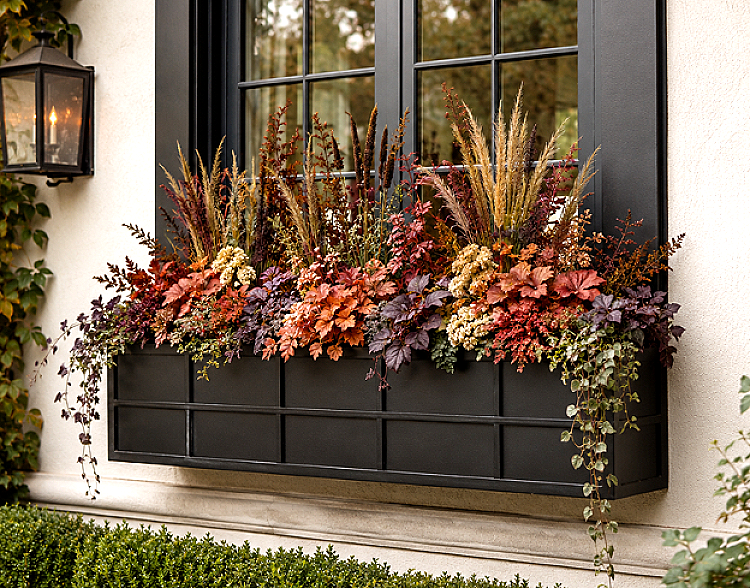
As summer flowers begin to decline, texture becomes especially important. Grasses, seed heads, branches, and foliage with contrasting leaf shapes can make an arrangement feel full and intentional even when fewer flowers are used.
In window boxes, place taller grasses or upright foliage toward the center or back, then soften the edges with trailing plants. In hanging baskets, allow vines and ivy to remain loose and natural while adding a few more structured plants near the center.
This combination of height, fullness, and movement helps the arrangement look polished from every angle.
Coordinate Without Matching Exactly
Window boxes and hanging baskets look most cohesive when they share a common palette, but they do not need to contain identical plants. Repeat one or two elements—such as burgundy foliage, cream flowers, or trailing ivy—then vary the supporting plants based on the container’s size, light conditions, and placement.
This creates visual continuity across the exterior while keeping each arrangement interesting.
Let the Transition Feel Natural
The most beautiful seasonal containers often evolve gradually. Begin by replacing only the plants that have faded, then continue adding cooler-weather varieties as temperatures change. Later in the season, evergreen cuttings, berries, branches, and pinecones can take the arrangements into late fall and early winter.
A thoughtful transition allows your window boxes and hanging baskets to remain beautiful for longer while giving your home a refreshed, welcoming look.