

Nov 11th 2026
How to Design a European-Inspired Courtyard
Save to Pinterest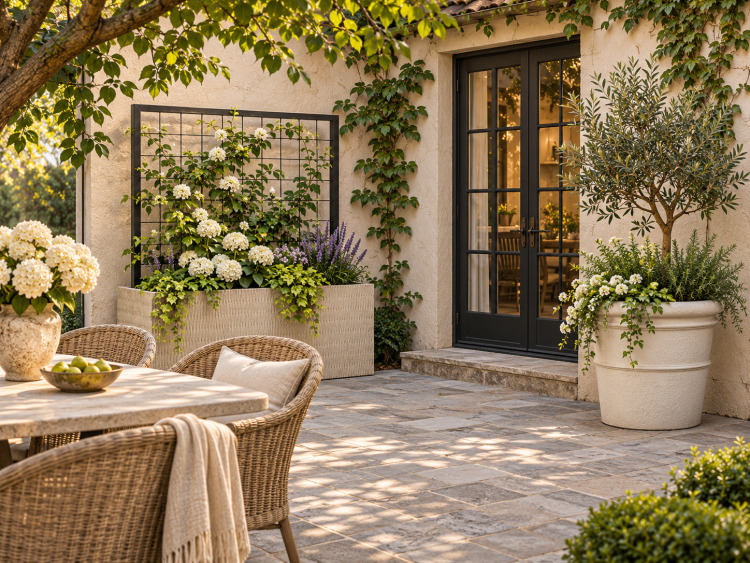
Some outdoor spaces feel finished the moment you enter them. European courtyards often have that quality. They feel sheltered but open, formal but comfortable, and layered without looking overly designed.
The appeal is not tied to one specific country or architectural style. An Italian courtyard may lean into stone, clipped greenery, and aged terracotta. A French-inspired space might introduce softer planting and elegant ironwork. Mediterranean courtyards often combine warm stucco, climbing plants, tile, and architectural details.
What these spaces tend to share is a sense of permanence. Materials feel substantial. Greenery is integrated into the architecture. Details look as though they belong there rather than being added as decoration.
Whether you are designing a private residence, multifamily property, hospitality space, or new home, these principles can help create a European-inspired courtyard with character and longevity.
Start With the Architecture
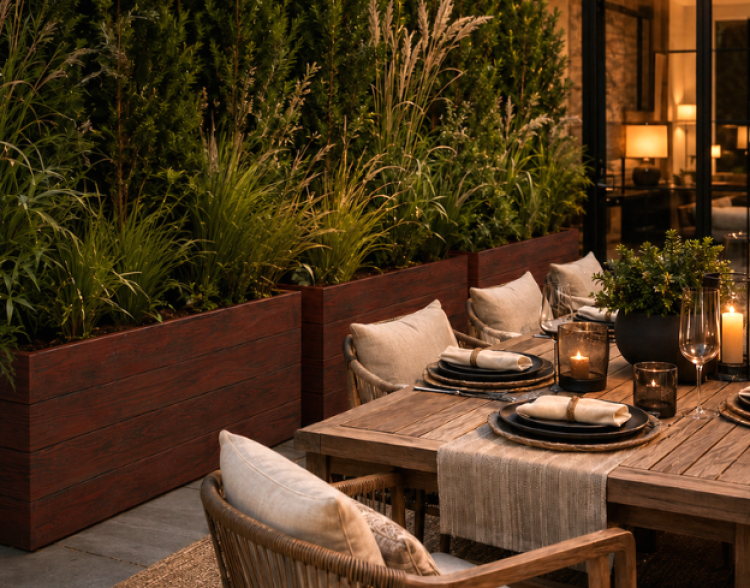
Before choosing plants or furnishings, look at the structure surrounding the courtyard.
European-inspired spaces often rely on enclosure to create intimacy. Walls, arches, columns, covered passages, and surrounding buildings help separate the courtyard from the spaces beyond it.
You do not need historic architecture to create the same feeling. Even a simple patio can become more courtyard-like by establishing stronger boundaries.
A trellis along a blank wall can create a vertical garden. Large planters can define the edge of a seating area. Iron screens, gates, or other architectural elements can help create separation without making the space feel closed off. The goal is to give the courtyard a sense of enclosure while still keeping it open and inviting.
For new construction, this is especially worth considering early. Incorporating courtyard details into the elevation from the beginning usually creates a more convincing result than adding decorative elements after the project is complete.
Keep the Material Palette Focused
One reason European courtyards feel so cohesive is that they rarely rely on dozens of competing materials.
Choose a limited palette and repeat it.
Natural or stone-look surfaces, warm stucco, brick, gravel, terracotta, aged metal, and wrought iron all lend themselves well to this style. The specific materials should complement the architecture rather than follow a formula.
Texture matters as much as color. A slightly rough planter against smooth stucco or dark iron against pale masonry creates contrast without introducing another color into the space.
For commercial properties, repeating the same material language across planters, architectural accents, and gathering spaces can also help a large project feel more unified.
Use Planters as Architectural Elements
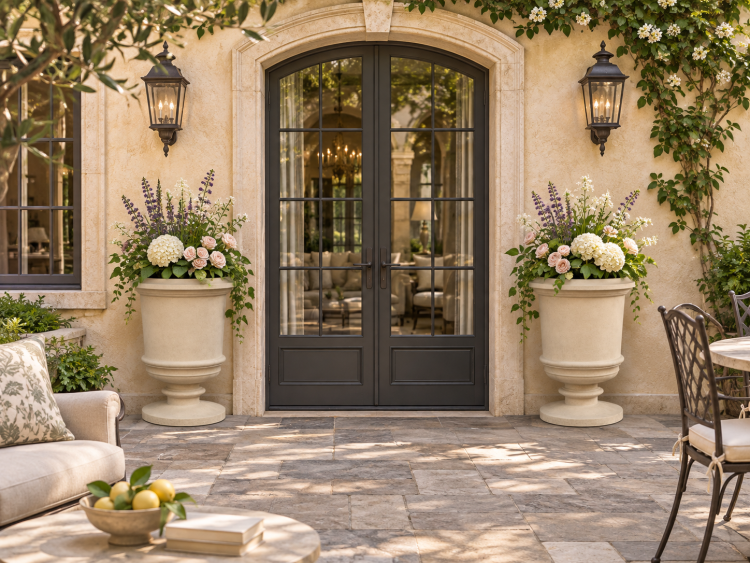
In a European-inspired courtyard, planters should do more than hold flowers.
Large containers can establish scale, create symmetry, direct circulation, or define outdoor rooms. A pair of substantial planters can mark an entrance, while a row of containers can subtly separate dining and lounge areas without constructing a wall.
Consider the planter itself as part of the architecture.
Classical urns can reinforce a more traditional French or Italian influence. Simple stone-textured forms work beautifully in Mediterranean and transitional spaces. Tall planters can add vertical emphasis beside doors and archways, while wide bowls can soften large expanses of paving.
Planting can be equally restrained. Olive-inspired trees, citrus, boxwood, rosemary, grasses, climbing vines, and flowering plants can all contribute to the look depending on climate and growing conditions.
For larger residential and commercial courtyard designs, repeating the same planter shape in multiple sizes is an effective way to create rhythm without making everything identical.
Let Greenery Travel Upward
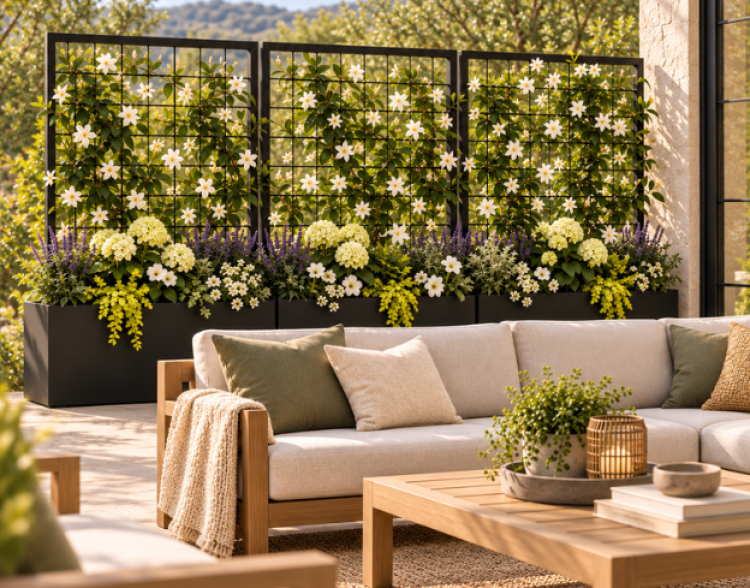
One of the most recognizable qualities of an established courtyard is that greenery is not limited to the ground.
It climbs.
Trellises allow vines and flowering plants to soften walls, frame seating areas, and add height where planting space is limited. Trellis planters are especially useful in smaller courtyards because they add vertical greenery while also helping define the edge of a space, all without requiring an in-ground bed. Used in a row, they can create a living backdrop around an outdoor dining area, rooftop terrace, or hospitality courtyard.
The effect becomes even more convincing over time as plants begin to weave through the structure. That sense of growth and age is part of what gives European garden spaces their charm.
Add Ironwork Where the Architecture Needs Depth
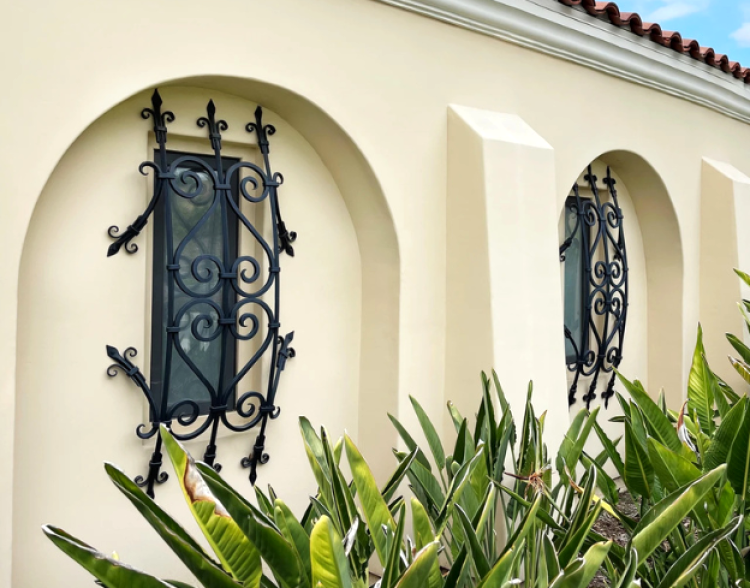
Wrought iron is one of the easiest ways to introduce old-world character, but placement is important.
Rather than adding iron details everywhere, identify the architectural moments that deserve emphasis.
A decorative iron accent can give presence to a blank wall. Iron brackets or architectural details can draw attention to an opening. Railings and gates can create a stronger sense of enclosure while still allowing light and views through the space.
Dark iron is particularly effective against stucco, stone, and warm masonry because the contrast makes even relatively simple detailing visible.
The strongest applications tend to feel integrated into the architecture rather than applied as ornament.
Look Up: Consider Faux Balconies
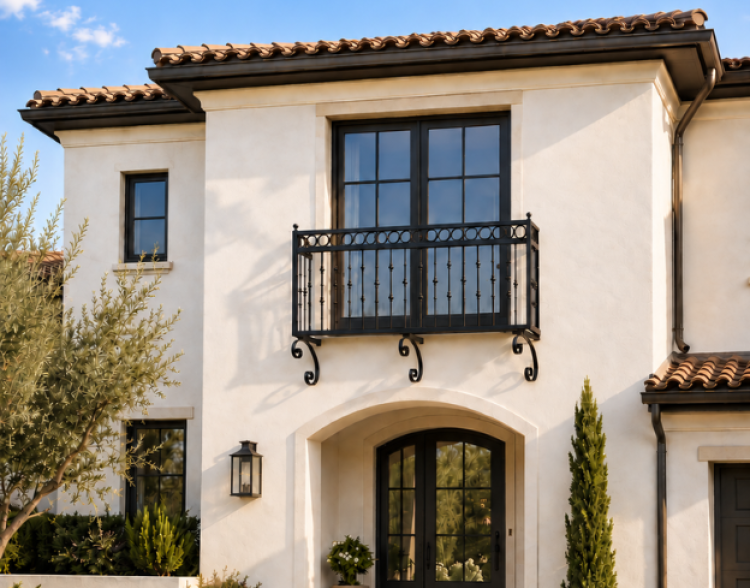
Courtyard design does not stop at ground level.
On taller façades, upper-story windows can feel disconnected from everything happening below. A faux balcony can help bridge that visual gap.
Placed beneath a window or French-door-style opening, a decorative balcony adds projection, shadow, and architectural detail without requiring a usable balcony floor. In a European-inspired courtyard, that extra layer can make an upper story feel much more intentional.
Faux balconies are particularly effective when repeated selectively around a courtyard or used to emphasize one important opening.
Scale is critical. Because upper-story details are often viewed from farther away, they need enough width, height, and projection to hold their own against the façade.
Create a Place to Stay
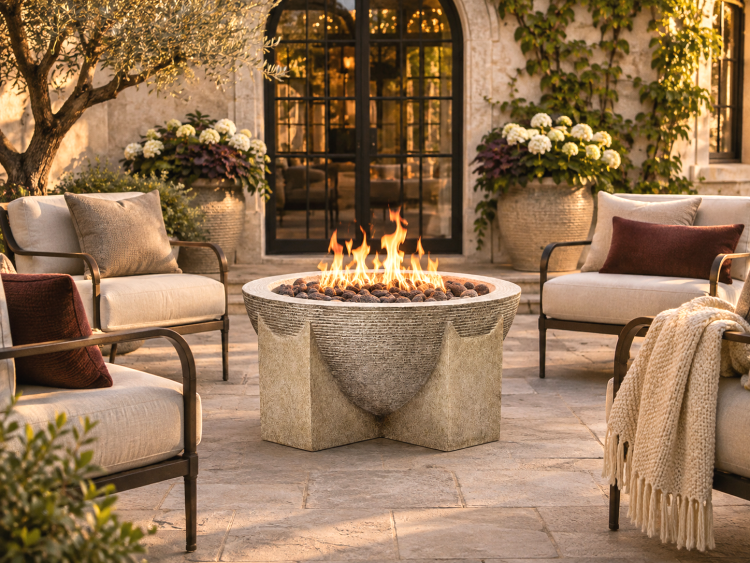
The best courtyards are not simply beautiful spaces to walk through. They invite people to remain.
A small café table beneath a climbing vine, a bench tucked against a wall, or a group of comfortable chairs around a fire feature can transform a pass-through space into a destination.
For commercial properties, consider how people will actually use the courtyard throughout the day. A restaurant may need intimate dining zones. A multifamily community may benefit from several smaller gathering areas. A hotel courtyard might combine lounge seating with quieter spaces along the perimeter.
Planters and trellises can help establish these zones without making the courtyard feel divided.
Finish With Restraint
Perhaps the most important lesson from European-inspired courtyard design is that character does not come from filling every available surface.
Leave room for materials to breathe. Let stone, iron, greenery, and architecture provide the decoration.
A handful of substantial planters will often create more impact than many small containers. One beautiful climbing wall can be stronger than greenery scattered everywhere. A carefully scaled faux balcony can give an elevation more character than several unrelated decorative elements.
The goal is not to copy a courtyard from Provence, Tuscany, or the Mediterranean. It is to borrow the principles that make these spaces so enduring: enclosure, texture, greenery, craftsmanship, proportion, and a sense that the architecture and landscape were designed together.
Done well, a European-inspired courtyard can feel both transportive and completely at home in its surroundings.
Explore planters, trellises, faux balconies, and architectural ironwork from Hooks & Lattice to bring more depth, greenery, and character to your next outdoor space.