Nov 11th 2026
The Heritage Holiday Entry: How to Create a Timeless Front Porch for the Season
Save to Pinterest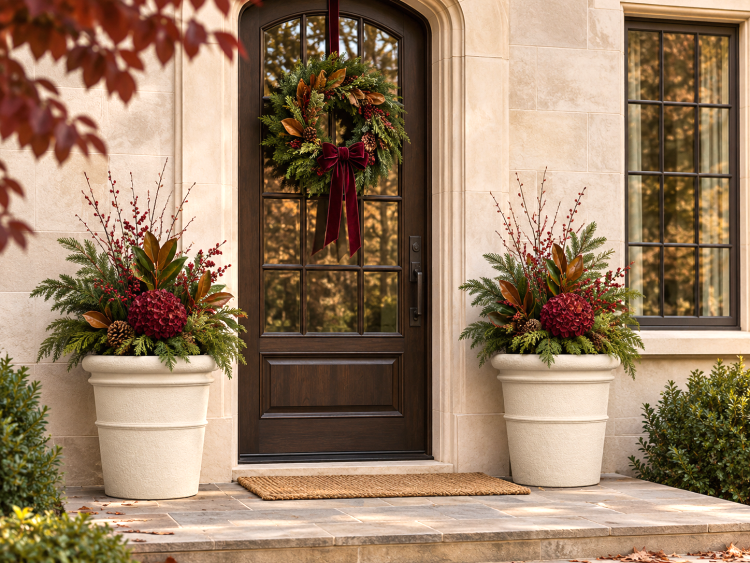
This holiday season, the most inviting entries are taking their cues from homes that feel as though they have been decorated the same way for generations.
Think rich greenery, substantial stone planters, tartan and velvet, warm brass, deep color, natural branches, and pieces that look collected rather than perfectly coordinated. The result is a front porch that feels classic, layered, and welcoming without relying on overtly themed décor.
Best of all, this approach works beautifully from Thanksgiving through Christmas. Start with a foundation of greenery, texture, and rich seasonal color, then make a few simple additions as December arrives.
Here is how to bring the heritage holiday look to your own front entry.
Begin With a Rich, Grounded Color Palette
Traditional red and green can certainly have a place, but this look becomes more interesting when the palette goes deeper.
Start with evergreen and layer in shades such as burgundy, oxblood, chocolate brown, navy, charcoal, bronze, and warm cream. These colors have a richness that feels appropriate for late fall while transitioning naturally into the holidays.
You do not need to use every color at once. A simple combination of deep green, burgundy, and brown can be enough to establish the mood.
Look to the existing exterior of your home as well. Dark shutters, warm brick, natural stone, bronze hardware, or wood doors can become part of the palette rather than something the decorations need to compete with.
Use Planters to Frame the Arrival
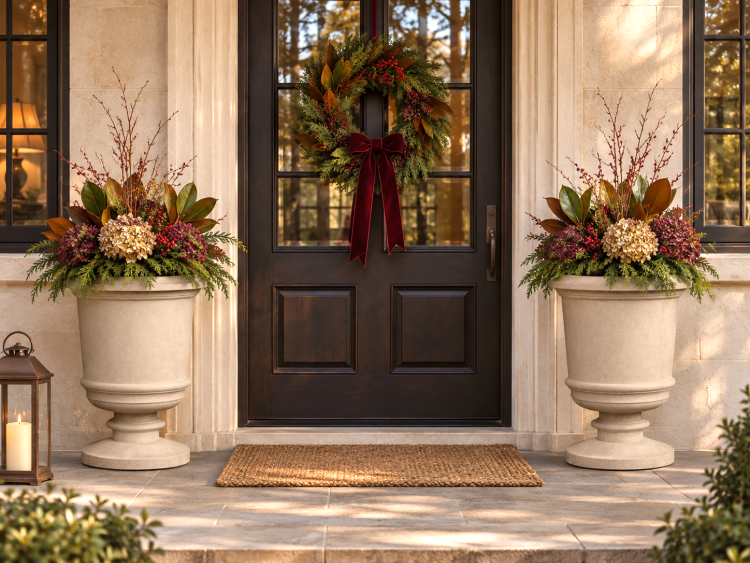
Large planters or urns beside the front door immediately give an entry a more substantial, established feel.
For a heritage-inspired porch, look for forms with a sense of permanence. Classic urn silhouettes, stone-like finishes, aged textures, and simple architectural shapes all work especially well.
Then fill them generously with seasonal greenery.
Evergreen branches such as cedar, pine, fir, or spruce create the foundation. Add magnolia leaves, bare branches, berries, or dried grasses for contrast. A few pinecones or seed pods can introduce another natural texture without making the arrangement feel overly decorated.
For Thanksgiving, keep the arrangement largely botanical. As Christmas approaches, you can add velvet ribbon, subtle lights, or a few ornaments without rebuilding the entire planter.
The most important thing is scale. A grand doorway can handle tall branches and large containers, while a smaller porch often looks better with a more restrained arrangement.
Give Window Boxes the Same Treatment
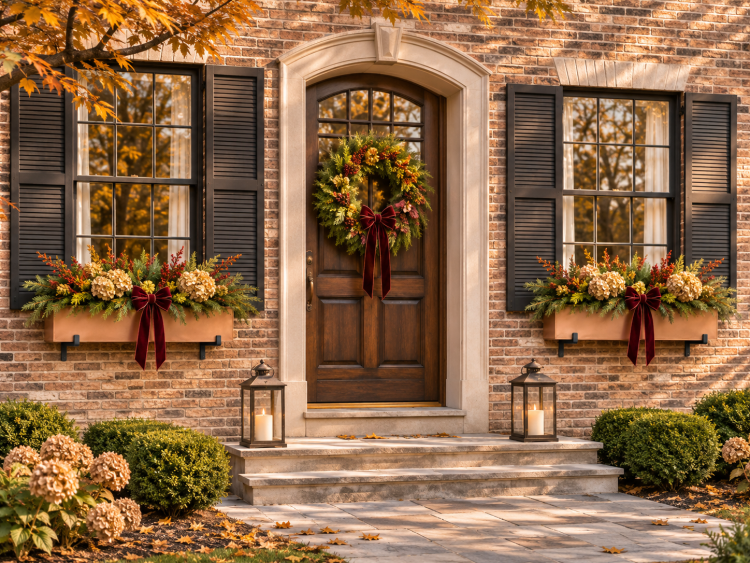
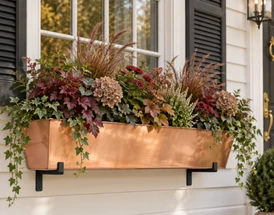
Window boxes are an easy way to extend the look beyond the front door and make the entire façade feel considered.
Replace fading fall annuals with evergreen cuttings and other materials that can withstand the transition into winter. Mix upright branches with softer greenery that trails slightly over the edge of the box.
Magnolia, cedar, pine, berries, dried hydrangea, grasses, and interesting branches can all work together.
Avoid making every box perfectly identical. Repeating the same materials creates continuity, but slight variations help the finished exterior feel collected and natural.
If your window boxes span several windows, they can also create a beautiful sense of rhythm across the front of the house.
Bring in Plaid, Tartan, and Velvet
Textiles are one of the easiest ways to give an outdoor space that classic country-house character.
A plaid or tartan ribbon tied around a wreath, planter, or garland adds color without overwhelming the architecture. Velvet ribbon brings a softer, slightly more formal quality and looks especially beautiful in burgundy, forest green, chocolate brown, or navy.
Use these details sparingly.
A single oversized bow often makes a stronger statement than small bows scattered across every surface. Likewise, repeating one plaid in two or three places will feel more intentional than mixing several competing patterns.
If you have covered outdoor seating, a plaid throw or textured cushion can carry the same feeling onto the porch.
Mix Materials That Feel Collected Over Time
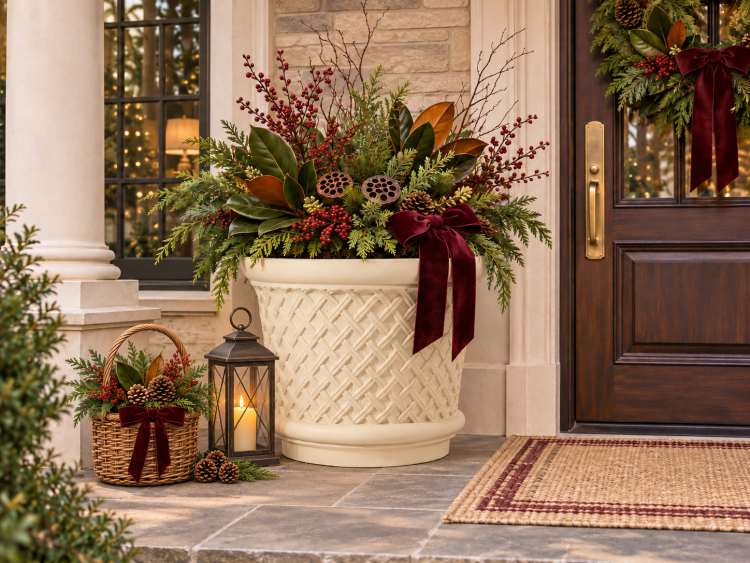
One of the keys to this look is resisting the urge to make everything match.
Pair stone or stone-look planters with wrought iron. Mix natural wood with aged metal. Add woven baskets, lanterns, or a slightly weathered container alongside more refined pieces.
The contrast is what gives the space character.
This is also a good opportunity to use pieces you already own. A vintage-looking lantern, an old crock, a favorite basket, or a weathered garden accent can make a new arrangement feel more personal.
Rather than asking whether every piece belongs to the same collection, ask whether they share the same sense of warmth, age, or craftsmanship.
Choose Natural Decorations Over Novelty Décor
Natural materials are especially well suited to a heritage holiday entry because they move easily from one celebration to the next.
Pinecones, branches, dried orange slices, nuts, berries, seed pods, evergreen cuttings, and magnolia leaves all add seasonal interest without tying the porch to one specific holiday.
For Thanksgiving, these materials can stand largely on their own.
Once December arrives, introduce small touches of Christmas through ribbon, bells, lights, or a wreath. Because the underlying design remains the same, the transition feels effortless.
This approach also keeps the porch from becoming crowded with signs, figurines, and other pieces competing for attention.
Add Metal Details
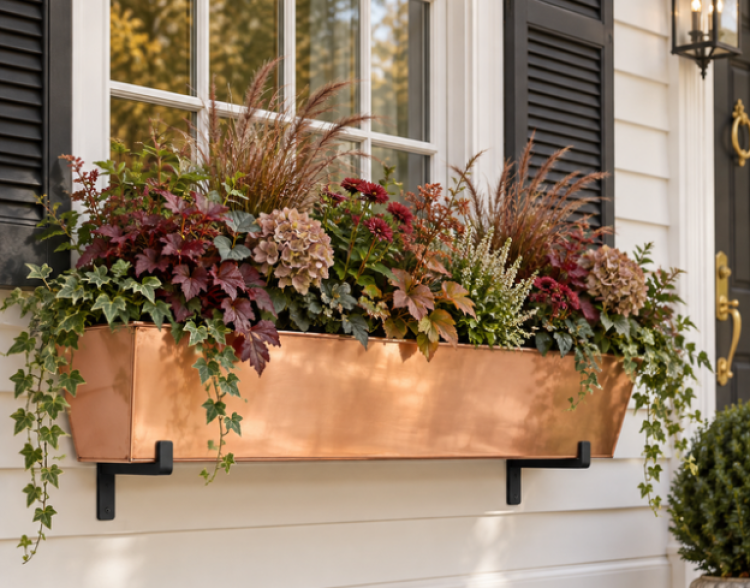
Brass, bronze, copper, and iron can provide just enough contrast against greenery and stone.
Consider a pair of lanterns near the doorway, a classic door knocker, wrought-iron accents, or containers with a warm metallic finish.
These details are particularly beautiful in the evening, when exterior lighting brings out their warmth.
Again, restraint is important. A few well-chosen metal accents will feel more timeless than filling the porch with shiny decorations.
Think About the Porch After Sunset
By November, many guests will experience your front entry after dark.
Warm lighting is part of the design.
Use existing sconces to highlight the doorway and planters, then add subtle illumination where it makes sense. Small warm-white lights woven through greenery, candles inside lanterns, or softly lit window boxes can create atmosphere without turning the porch into a light display.
The goal is a warm glow that makes the house feel inviting from the street.
Let the Entry Feel Layered, Not Perfect
Perhaps the most important part of the heritage holiday look is that it should not appear overly staged.
Let greenery fall naturally. Mix container shapes and heights. Allow natural materials to show their texture. Choose decorations because they complement the home, not because they belong to a matching set.
A beautiful holiday entry should feel as though it belongs to the architecture and has evolved over time.
Start with substantial planters and window boxes, layer in evergreen foliage and natural texture, introduce rich colors and classic materials, and then add just enough holiday detail to mark the season.
The result is a front porch that feels welcoming at Thanksgiving, festive at Christmas, and timeless enough to enjoy all winter long.